Home Is Where Health Begins:
How Affordable Housing Protects the Well-Being of St. Helena
Housing insecurity isn’t just a financial problem. It is a health crisis. And in St. Helena, a local nonprofit organization, Our Town St Helena, has for more than a decade been proving that building affordable homes is accomplishing more than housing people who are vital to the wellbeing of the community. It is helping to ensure the wellbeing of the people who live in our homes.
The science is unambiguous. The Center for Disease Control formally recognizes housing as one of the strongest social determinants of health — where you live shapes how healthy you are, how long you live, and whether your children will thrive. When housing is inaccessible, unstable or unaffordable, the consequences can reach every dimension of well-being. Families experiencing housing instability report higher rates of depression and anxiety, high blood pressure, and chronic disease. Even more distressing is the impact housing instability has on U.S. children. According to the National Institute of Health study, US Housing Insecurity and the Health of Very Young Children, housing instability significantly increases the risk of physical and mental health issues due to factors like limited access to healthcare, poor sleep, lower ability to cope with stress, food insecurity, and greater exposure to infectious disease. Housing instability also impacts childhood education and development, with children repeating a grade being twice as probable than children in stable housing.
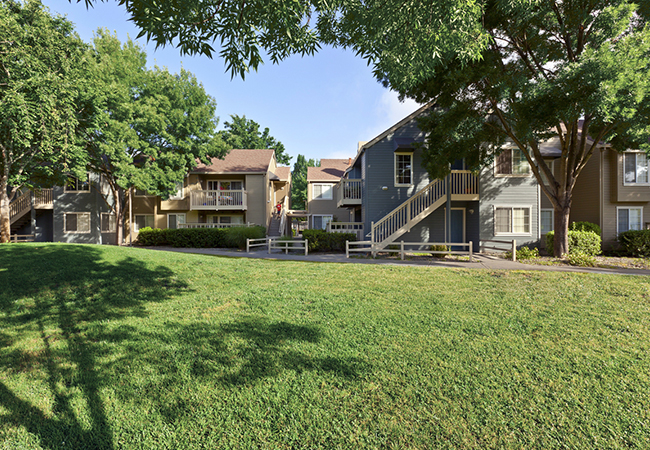 The flip side is equally clear, as reported by the Center for Outcomes Research and Education in partnership with Enterprise Community Partners. When low-income households move into stable, affordable housing, hospital emergency room visits drop by 18 percent, primary care visits increase by 20 percent, and Medicaid healthcare expenditures fall by 12 percent in the first year alone.
For St. Helena’s workforce families — primarily teachers, farmworkers, healthcare workers, and service employees for whom housing affordability is a daily arithmetic problem — these are not abstract statistics. They are real stakes.
Our Town St. Helena (OTSH) was founded on the conviction that a thriving community requires accessible housing for a diverse population — people who live and work here, send their children to school here, and sustain the social fabric that makes St. Helena such a vibrant small town. Since its founding in 2009, OTSH has built or preserved 35 affordable homes serving approximately 130 residents through five completed acquisitions or new construction projects: Birch Street (2018), Brenkle Court (2019–2022), Christine Apartments (2021), Monte Vista Apartments (2025), and Gamble Grove (2026).
Several of these homes serve a family whose children attend a local school and develop with the stability their growing brains require; a senior who isn’t choosing between rent and medication; a worker who arrives at the job rested rather than road-weary from a long commute, and healthy enough to stay there.
The next chapter is Fountain Street. OTSH and its development partner, Burbank Housing, are preparing to build 39 affordable rental apartments and one manager’s unit on land to be donated by the Phelps Family — the most significant addition of affordable housing St. Helena has seen in over two decades. City entitlements were approved in October 2025. The City of St. Helena has committed $3.3 million from its Affordable Housing Trust Fund. Private donors have contributed and pledged approximately $4.4 million toward the project’s $10 million fundraising goal. A federal tax credit application will be submitted in July 2026, with construction targeted for 2027–2028.
The completed one-, two- and three-bedroom apartments will provide homes for workers, seniors, and families whose health and futures will benefit from the stability that only a safe, quality, affordable home can provide.
Housing and health have always been part of the same story. In St. Helena, OTSH is writing the next chapter.
To support the Fountain Street Apartments campaign or learn more, explore our Projects page.
Sources:
1. Centers for Disease Control and Prevention. “Social Determinants of Health (SDOH).” CDC, October 15, 2024. https://www.cdc.gov/about/priorities/why-is-addressing-sdoh-important.html
2. Cutts, Diana Becker, et al. “US Housing Insecurity and the Health of Very Young Children.” American Journal of Public Health, vol. 101, no. 8, 2011, pp. 1508–1514. https://doi.org/10.2105/AJPH.2011.300139 3. Marguerite’s Place. “The Harmful Impact of Housing Instability on Child Development.” January 16, 2025. https://margueritesplace.org/housing-instability-and-child-development/
4. Center for Outcomes Research and Education (CORE) and Enterprise Community Partners. “Health in Housing: Exploring the Intersection between Housing and Health Care.” As cited in: National Low Income Housing Coalition. “Study Finds Affordable Housing Reduces Health Care Costs.” https://nlihc.org/resource/study-finds-affordable-housing-reduces-health-care-costs
5. Habitat for Humanity International. “How Does Housing Impact Health?” Research Evidence Brief, U.S. Research and Measurement Team, 2021. https://www.habitat.org/our-work/impact/research-series-how-does-housing-impact-health
6. Sims, Mario, et al. “The Importance of Housing and Cardiovascular Health and Well-Being: A Scientific Statement from the American Heart Association.” Circulation: Cardiovascular Quality and Outcomes, July 15, 2020. https://www.ahajournals.org/doi/10.1161/HCQ.0000000000000089
7. Princeton University Eviction Lab. Eviction Lab Research and National Eviction Database. Founded by Matthew Desmond, Princeton University Department of Sociology. https://evictionlab.org
8. Becker Friedman Institute for Economics, University of Chicago. “Housing, Income Mobility, and Education.” Research initiative on housing markets and economic opportunity. https://bfi.uchicago.edu/housing-income-mobility-and-education/